
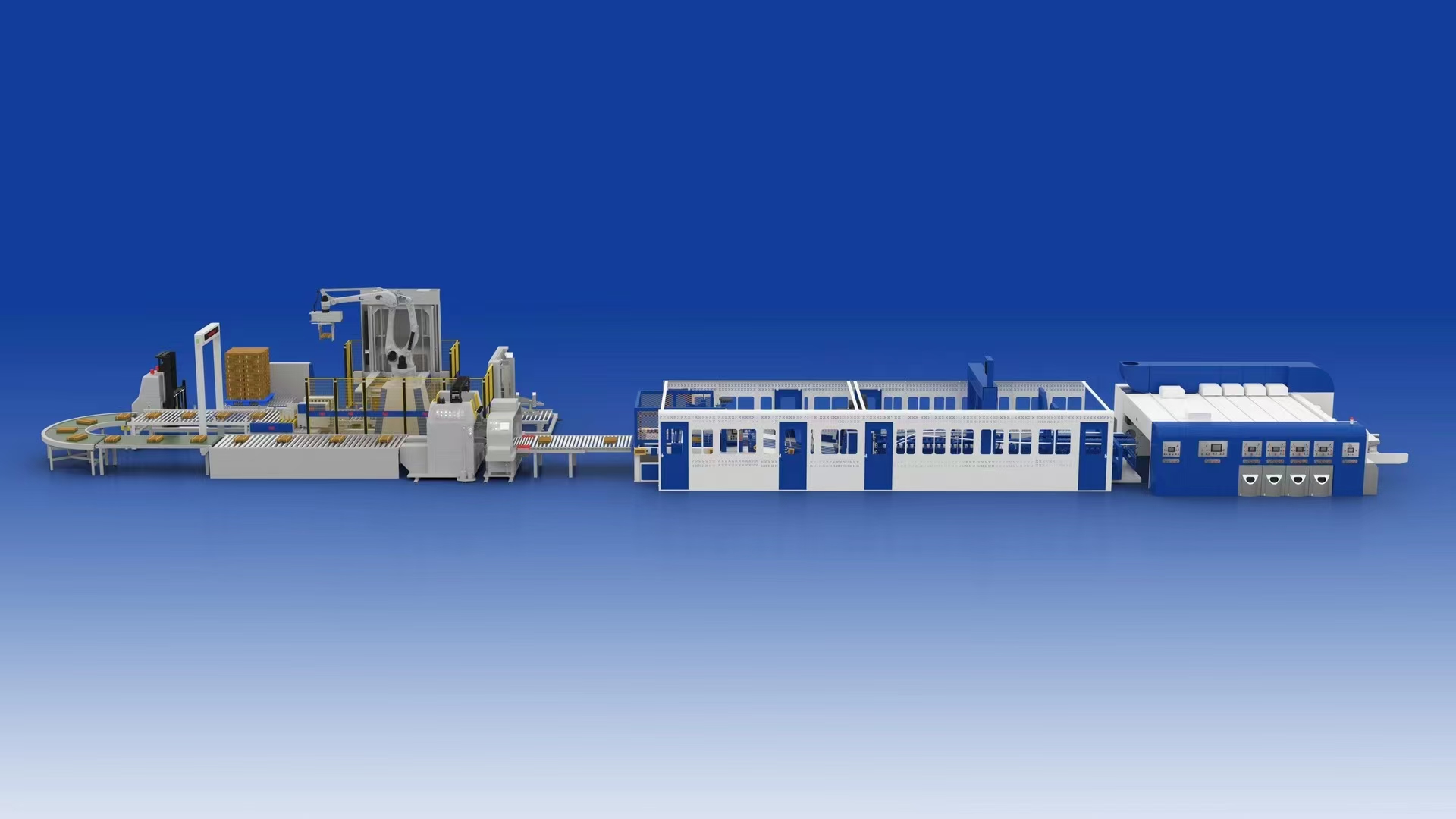
How a Flexo Printer Slotter Die Cutter Solves Fish-tailing and Squaring Issues in Corrugated Boxes
A production line is running at full speed. Everything seems normal—until the cartons reach the automatic packaging line. Suddenly, jams occur. Boxes fail to close properly. Some show visible gaps after folding. Many operators assume the folder gluer is the problem. In reality, the issue often starts much earlier. Fish-tailing and squaring issues in corrugated boxes are usually caused by poor slotting accuracy. This means the root cause often lies in the Flexo Printer Slotter Die Cutter, not the folding stage.
What Is Fish-tailing and Why It Affects Box Squareness
Fish-tailing in corrugated boxes refers to a defect where the flaps do not align evenly after folding. The joint appears open, skewed, or uneven.
You may hear it described as:
- Boxes not square after folding
- Carton gaps after gluing
- Flaps not meeting correctly
These are all forms of squaring issues in corrugated boxes.
Why it matters:
- Boxes cannot run smoothly on automatic lines
- Glue joints become weak
- Product appearance suffers
- Customer complaints increase
Fish-tailing is not just a cosmetic issue. It directly impacts production efficiency and final product quality.
How to Identify the Root Cause of Fish-tailing
Not all fish-tailing problems come from the same source. A quick diagnosis can save time and cost.
1. Check the joint position
- Gap on one side: likely a slotting alignment issue
- Uneven on both sides: may involve folding or scoring
2. Inspect the creasing lines
- Uneven creasing leads to uneven folding
- This creates stress imbalance during forming
3. Compare low speed and high speed
- Issue appears only at high speed: machine rigidity problem
- Issue exists at all speeds: alignment problem
4. Test single sheet vs batch production
- Single sheet OK, batch not: synchronization issue
- Both defective: upstream processing issue
Key insight:
If the error starts in the slotting stage, downstream machines cannot fully correct it.
The Real Causes Behind Fish-tailing and Squaring Issues
Fish-tailing is usually the result of multiple small errors accumulating across the process.
1. Slotting Section Misalignment
Slotting section alignment is one of the most critical factors.
Even a small deviation can cause:
- Uneven flap dimensions
- Misaligned folding edges
- Distorted box shape
This is why the Flexo Printer Slotter Die Cutter plays a central role in final box quality.
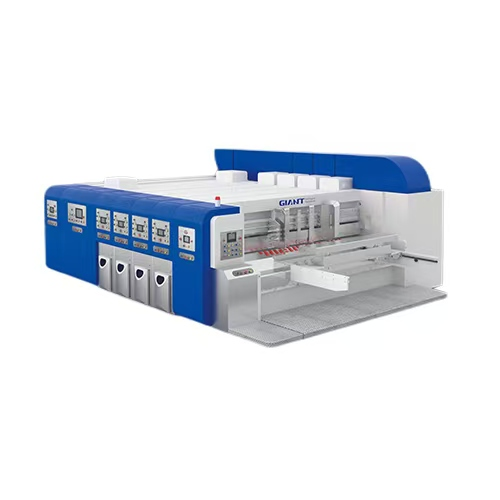
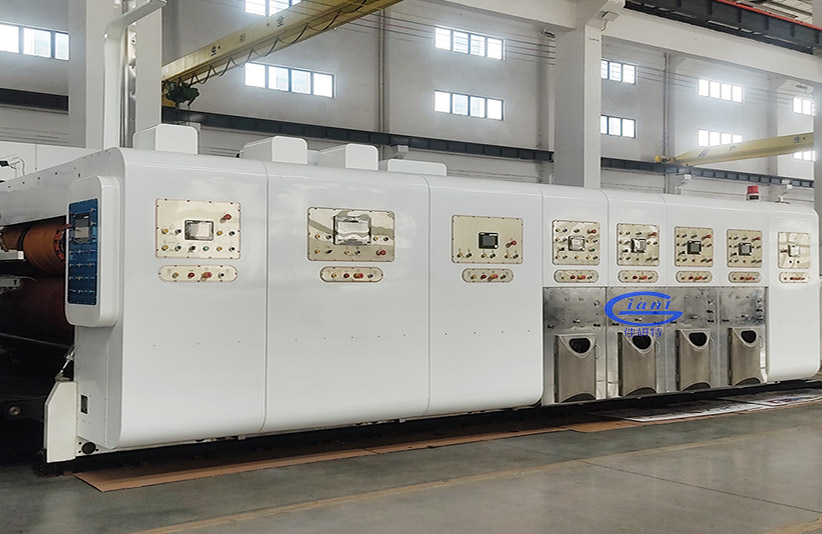
Flexo Printer Slotter Die Cutter Machine for inline Corrugated Machine
2. Inconsistent Creasing
Creasing determines how the board folds.
If creasing is uneven:
- Folding angles differ
- Stress becomes unbalanced
- Flaps shift during folding
3. Machine Rigidity Issues
At high speeds, machines with insufficient rigidity may:
- Vibrate
- Shift slightly
- Lose alignment over time
This leads to unstable production and inconsistent results.
4. Process Synchronization Errors
Corrugated box production is a continuous chain:
Slotting, Folding, and Gluing
If these stages are not synchronized:
- Small errors multiply
- Final box geometry becomes inaccurate
This creates what can be described as an “error chain.”
Why Traditional Fixes Don’t Work
When fish-tailing appears, operators often try quick adjustments:
- Adjusting folder gluer guides
- Slowing down production
- Manual correction
These methods may reduce the issue temporarily, but they do not solve the root problem.
Limitations:
- They treat symptoms, not the source
- They reduce efficiency
- They are not stable long-term
Conclusion:
If slotting accuracy is poor, no downstream fix can fully solve the problem.
How a Flexo Printer Slotter Die Cutter Improves Box Squareness
To eliminate fish-tailing, precision must be controlled at the source. A high-quality Flexo Printer Slotter Die Cutter ensures accurate processing from the very beginning.
1. High-precision Slotting System
Modern machines provide:
- Accurate knife positioning
- Stable transmission
- Automated alignment
This minimizes initial errors and ensures consistent dimensions.
2. Precision Guide Rail Structure
A precision guide rail system helps:
- Maintain straight movement
- Reduce vibration
- Improve long-term stability
This is essential for maintaining slotting accuracy during continuous operation.
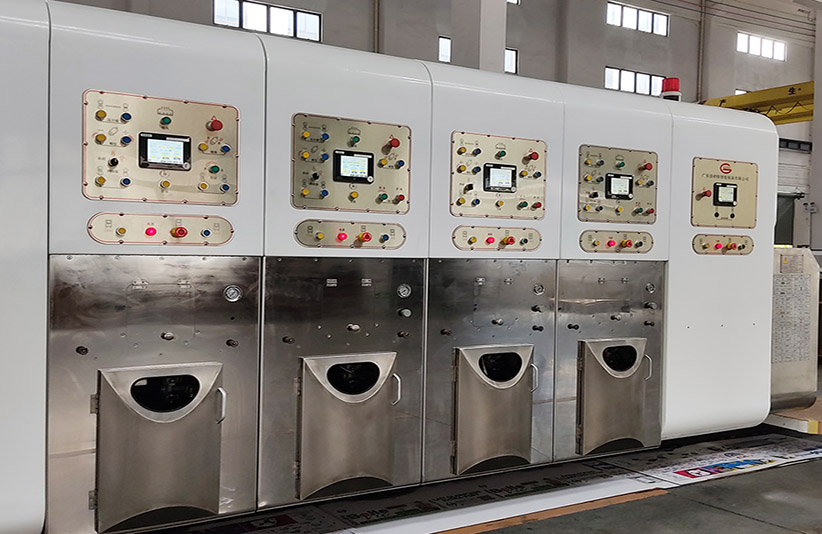
High Speed 380 sheet Flexo Printer Slotter Die Cutter Machine -GMVP-0618
3. Integrated Folding Coordination
Advanced systems synchronize slotting and folding.
This ensures:
- Better alignment between creasing and folding
- Reduced stress during forming
- More consistent box shape
4. Heavy-duty Machine Construction
A rigid machine structure provides:
- Stability at high speed
- Resistance to deformation
- Long-term precision
This is critical for maintaining consistent performance in demanding environments.
Real Production Improvements After Optimization
When slotting accuracy improves, the results are immediate.
Before:
- Visible fish-tailing
- Gaps at joints
- Frequent jams in automatic lines
After:
- Tight and clean joints
- Square box shape
- Smooth operation on packaging lines
Factories often experience:
- Reduced waste
- Higher efficiency
- Less manual intervention
When Should You Upgrade Your Flexo Printer Slotter Die Cutter
Some problems cannot be solved through adjustment alone.
Consider upgrading if:
- Fish-tailing occurs frequently
- Boxes fail in automatic lines
- High-speed production is unstable
- Customer complaints increase
At this point, the issue is not operational—it is structural.
How to Choose the Right Flexo Printer Slotter Die Cutter
Selecting the right equipment is essential for long-term stability.
Key factors:
- Slotting precision
- Machine rigidity
- Synchronization capability
- Long-term consistency
A reliable Flexo Printer Slotter Die Cutter should deliver stable performance over time, not just short-term accuracy.
Conclusion: Solving Fish-tailing Starts with the Right Flexo Printer Slotter Die Cutter
Fish-tailing is not just a folding defect. It is a precision issue that begins at the slotting stage and affects the entire production process. If the initial alignment is off, downstream adjustments cannot fully correct it. That is why investing in a high-performance Flexo Printer Slotter Die Cutter is essential for improving box squareness, reducing waste, and maintaining stable production.
This is where manufacturers like Giant offer a practical solution. With a focus on precision manufacturing and structural stability, Giant’s Flexo Printer Slotter Die Cutter systems are designed to maintain alignment and deliver square, well-formed boxes even under high-speed conditions.