
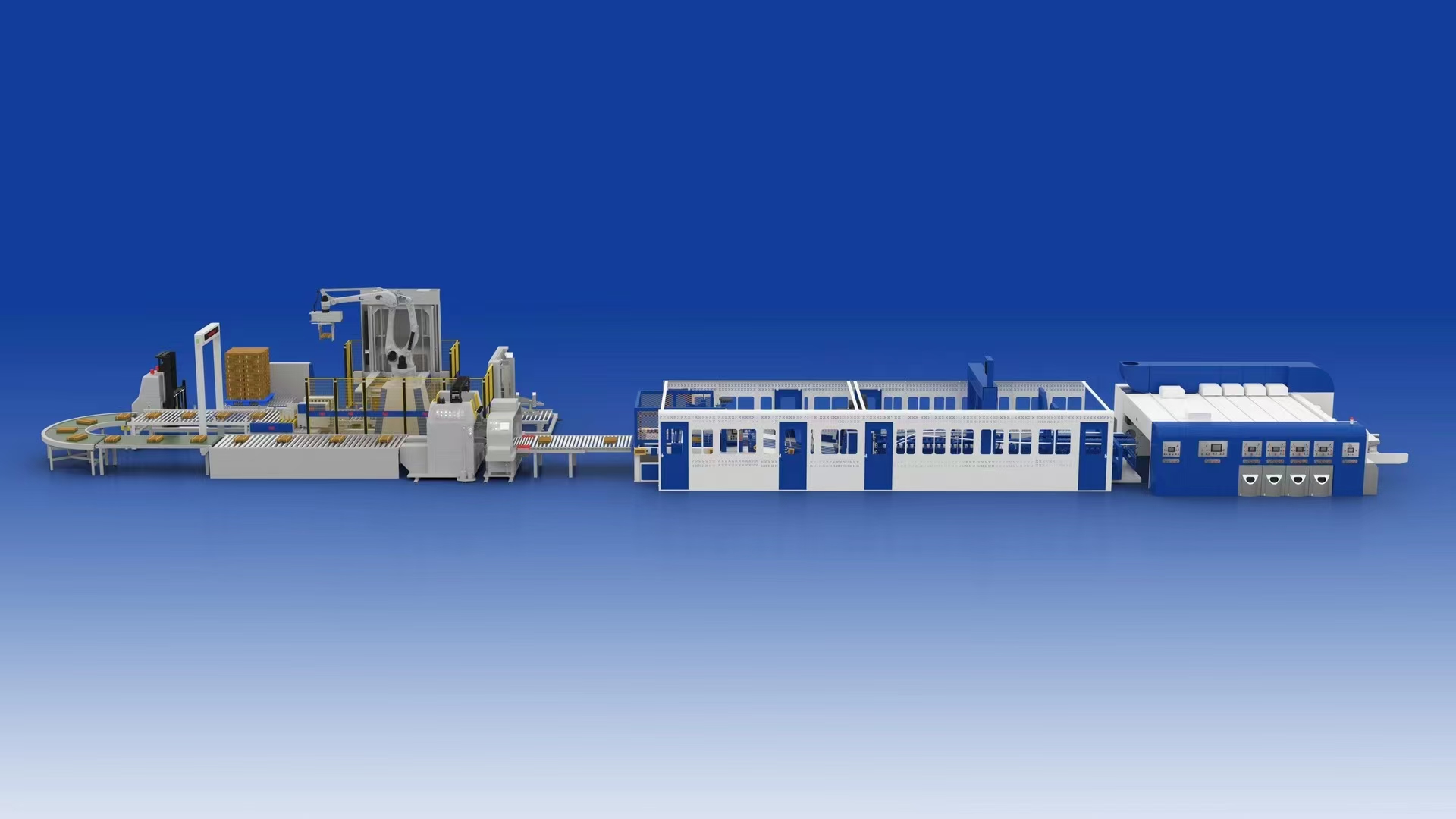
How to Solve Registration Issues in a Flexo Printer Slotter Die Cutter at High Speed
It usually starts with a small shift. A slight color misalignment on a corrugated box. Then another. Before long, the production line is running at full speed, but the stacks of misprinted cartons keep growing. At over 200 sheets per minute, even the smallest movement can turn precision into waste. For operators working with a Flexo Printer Slotter Die Cutter, maintaining perfect registration is often easier said than done. So what really causes these issues—and how can they be controlled?
What Is Registration in a Flexo Printer Slotter Die Cutter?
Registration refers to the accurate alignment of different printing colors and cutting positions on corrugated board. In a Flexo Printer Slotter Die Cutter, multiple printing units must work in perfect synchronization.
When registration is correct:
- Colors align precisely
- Graphics appear sharp
- Cuts and folds match the design
When it fails:
- Colors shift
- Images blur or double
- Products become scrap
This is where flexo printing accuracy becomes critical, especially in high-speed production environments.
Why Registration Issues Happen at High Speed
Many operators notice that registration becomes unstable only when the machine runs faster. This is not a coincidence.
At high speeds, small mechanical or material issues become amplified.
1. Paper Slippage
One of the most common causes is paper slippage.
As the board moves through the machine:
- Friction varies
- Grip may weaken
- The sheet shifts slightly
Even a tiny shift can cause noticeable misalignment.
This is often the root cause behind many registration troubleshooting cases.
2. Mechanical Synchronization Errors
In a Flexo Printer Slotter Die Cutter, multiple units operate together:
- Printing units
- Slotting units
- Die cutting units
If these components are not perfectly synchronized:
- Timing errors occur
- Alignment drifts over time
- Print position shifts gradually
3. Tension and Pressure Instability
Tension plays a critical role in maintaining stability.
If tension is:
- Too loose: The sheet moves unpredictably
- Too tight: The board stretches or deforms
Pressure inconsistencies also affect how the board interacts with rollers and transfer systems.
4. High-Speed Amplification Effect
At lower speeds, small errors may go unnoticed.
But at 200+ sheets per minute:
- Tiny deviations become visible
- Minor shifts become large defects
- Waste increases quickly
This is why flexo printing accuracy becomes significantly harder to maintain under high-speed conditions.
Registration Troubleshooting: A Practical Approach
When registration issues occur, it is important to follow a structured troubleshooting process.
Step 1: Check the Feeding System
The first area to inspect is the feeding system.
Look for:
- Uneven feeding
- Misaligned boards
- Feeding delays
A stable feeding system is the foundation of accurate registration.
Step 2: Evaluate Tension Control
Check whether tension is consistent throughout the process.
- Monitor fluctuations
- Adjust tension settings
- Ensure smooth material flow
Step 3: Inspect Mechanical Components
Over time, wear and tear can affect performance.
Key areas include:
- Bearings
- Gears
- Shafts
Even slight wear can introduce alignment errors.
Step 4: Adjust and Calibrate
Regular calibration is essential.
- Align printing units
- Check synchronization
- Fine-tune settings
This step is critical for maintaining long-term registration troubleshooting effectiveness.
Why Traditional Systems Struggle at High Speed
Even with proper maintenance, traditional systems often struggle at high speeds.
Because they rely heavily on:
- Mechanical friction
- Manual adjustments
- Limited control over board movement
At high speed, these limitations become more noticeable.
The Core Problem: Board Movement Instability
The real issue behind most registration problems is simple. The board is not fully controlled during transfer.
If the board moves even slightly:
- Registration shifts
- Print accuracy decreases
- Waste increases
This is where advanced systems make a difference.
Vacuum Transfer: A Smarter Way to Control the Board
One of the most effective ways to improve registration is through vacuum transfer technology.
A vacuum transfer system stabilizes the board during movement using controlled airflow and negative pressure.
How It Works
- Airflow is precisely controlled
- Negative pressure is generated
- The board is held firmly in place
This creates a stable transfer process with minimal movement.
Key Benefits
- Reduces slippage
- Improves alignment accuracy
- Enhances stability at high speed
- Supports consistent output quality
In short, it directly improves flexo printing accuracy.
A Practical Example: Giant Flexo Printer Slotter Die Cutter
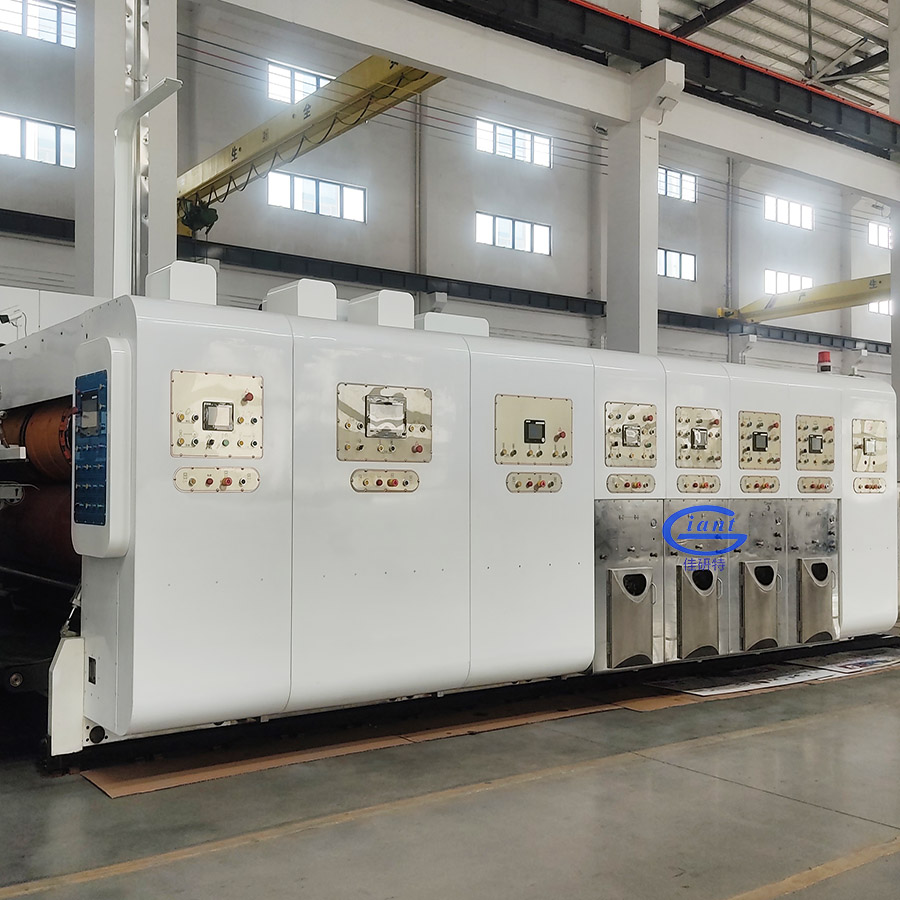
A good example of this technology in action is the Giant Flexo Printer Slotter Die Cutter Machine. This system integrates advanced vacuum transfer control with precise airflow management.
What Makes It Effective?
- Precise airflow control
- Stable board handling
- Reliable performance at high speeds
The vacuum system helps “hold” the corrugated board in place during transfer, reducing unwanted movement.
This directly improves:
- Registration accuracy
- Production consistency
- Overall efficiency
Customized Produce Automatic Cardboard Corrugated Carton Box Making Machine GMVP-1840
Why Vacuum Transfer Matters at 200+ Sheets per Minute
At high speeds, even the smallest instability can cause major issues.
Vacuum transfer helps solve this by:
- Eliminating slippage
- Controlling sheet position
- Maintaining consistent alignment
This makes it especially valuable in modern corrugated production lines.
Choosing the Right Flexo Printer Slotter Die Cutter
When selecting equipment, focus on more than just speed.
Key factors include:
1. Registration Accuracy
- Does the machine maintain alignment under load?
- How stable is it at high speed?
2. Material Handling
- Does it control board movement effectively?
- Does it minimize slippage?
3. System Stability
- Is performance consistent over time?
- Does it require frequent adjustments?
4. Technology Integration
- Does it include advanced systems like vacuum transfer?
Machines that integrate such technologies provide better long-term performance.
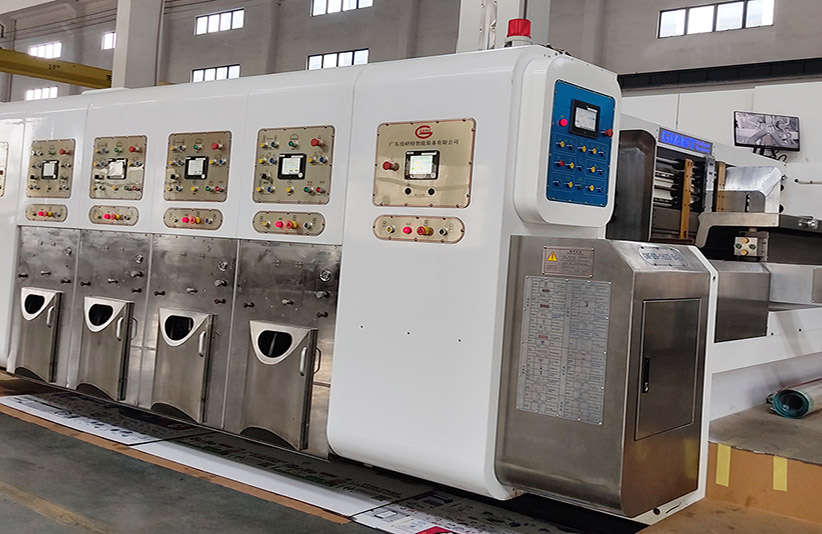
Full Automatic Corrugated Carton Flexo Printing Folder Gluing Strapping Inline Machine -GMVP-2046
Why Precision Manufacturing Matters
High-quality equipment is built with precision in mind.
With a strong manufacturing foundation:
- Tolerances are tighter
- Components last longer
- Performance remains stable
This is where engineering expertise becomes critical.
Conclusion
Registration issues in a Flexo Printer Slotter Die Cutter are one of the most challenging problems in corrugated production—especially at high speeds. The root cause is often not the printing itself, but the instability of the board during transfer. By improving material control and adopting advanced technologies like vacuum transfer systems, manufacturers can significantly enhance flexo printing accuracy and reduce waste.
Manufacturer like Giant demonstrate how precision engineering can help solve one of the industry’s most persistent challenges. In high-speed production, stability is everything—and controlling the board is the first step toward perfect registration